
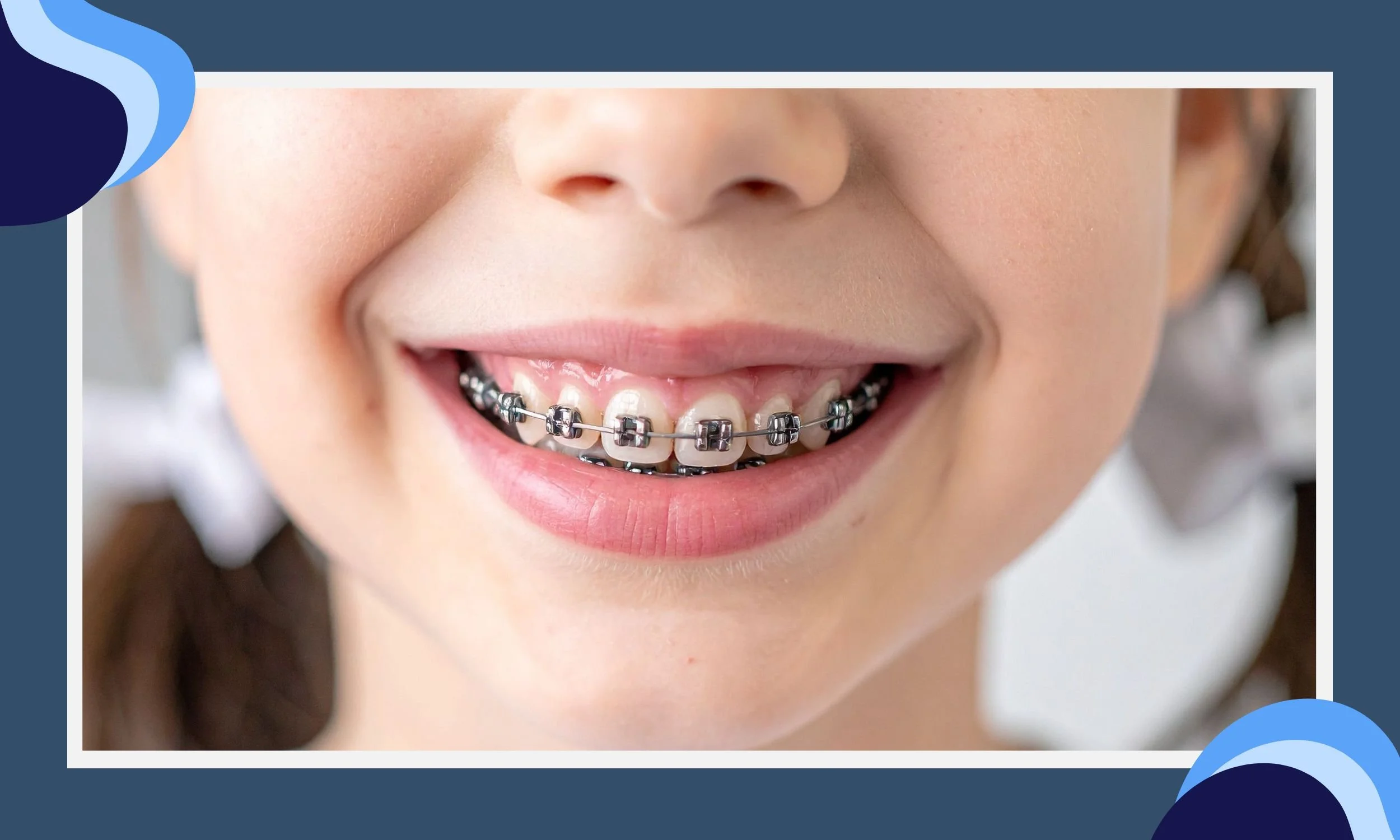
Orthodontic care is often discussed for the first time in the preteen years, usually around age 10 or 11, when a dentist brings up the possibility of braces. In some cases, signs that benefit from orthodontic evaluation can be seen earlier.
The American Association of Orthodontists recommends an initial evaluation by age 7. By this stage, enough permanent teeth have started to come in for a trained eye to notice early patterns in growth and development.
An early evaluation does not always lead to treatment right away. In many situations, it simply leads to observation over time. Even so, having that information early gives your child’s dental team a path to follow as they grow.
There are also signs that may show up at home. Below are a few things to look for.
Crowded or Crooked Teeth
This is often one of the more noticeable signs. Some people assume crowding will resolve on its own. In a few cases, it does, but in many situations, it continues as adult teeth come in.
If you notice teeth overlapping, shifting at angles, or limited space in the mouth, mention it at your child’s next dental visit. Crowding often develops when the jaw does not have enough room for permanent teeth to come in properly.
Early or Late Loss of Baby Teeth
Most children begin losing baby teeth around age 6, following a general sequence. When a baby tooth is lost earlier than expected due to decay or injury, nearby teeth may drift into the open space. This can block or change the path of the permanent tooth meant to come in.
The reverse can also happen. Baby teeth that stay in place longer than expected can interfere with the eruption of permanent teeth. In these cases, a permanent tooth may come in at an unusual angle because the baby tooth is still there.
Difficulty Biting or Chewing
If your child mentions that chewing feels uncomfortable, or you notice they avoid harder or crunchier foods, this is something to pay attention to. Discomfort while eating can point to a bite issue where the teeth are not coming together as they should.
Mouth Breathing
When children breathe through their mouths for long periods, the resting position of the tongue can shift. Since the tongue helps guide how the upper jaw develops, this change can affect dental development over time.
Prolonged Thumb Sucking
Thumb sucking is common in babies and young toddlers. It becomes more of a concern when the habit continues beyond about age 4.
When it continues longer, thumb sucking can push the upper front teeth forward. It may also influence the position of the lower teeth and jaw. As the habit continues and becomes more frequent or forceful, changes in the bite are more likely to develop.
Speech Difficulties
Not every speech concern is linked to dental development, and not every dental issue leads to changes in speech. Still, there are situations where the two are connected.
If your child continues to struggle with certain sounds such as “s,” “sh,” or “th” beyond the usual age range, tooth or jaw positioning may be part of the picture.
A lisp, for example, can sometimes be associated with an open bite, where the front teeth do not fully meet.
Jaw Shifting, Clicking, or Popping
If your child’s jaw shifts to one side when opening or closing the mouth, or they mention clicking, popping, or discomfort around the jaw joint, this is something to pay attention to.
Jaw shifting can be linked to a crossbite, where the upper and lower teeth do not line up correctly from side to side.
Biting the Cheek or Roof of the Mouth
If your child often bites the inside of the cheek or the roof of the mouth, it can suggest that the bite is not aligned properly, which allows the soft tissues to get caught during chewing.
Protruding Teeth
Protruding teeth refer to upper front teeth that stick out farther than usual, also known as an overjet. This condition can be addressed, and earlier evaluation often gives more options when planning next steps.
How Parents Can Monitor Dental Development
Parents can look for signs in their child’s mouth at home, but many of these issues are not obvious. It is important to take your child to regular dental appointments and ask questions. Your child’s dentist tracks development over time, and those visits provide a baseline for comparison.
Between visits, watch how your child bites into food. Notice whether they complain about their teeth or jaw. Pay attention to their smile from time to time and whether anything seems different from one year to the next.
If you have noticed any of the signs listed above in your child, or if you are unsure, consider having your child’s dentist take a look.
Read more: When to Consider an Orthodontic Evaluation for Your Child
At Pelican Pediatric Dentistry, we provide early orthodontic evaluations at our offices in Lafayette and New Iberia, LA. During the visit, we assess jaw development, tooth spacing, bite patterns, and growth trajectory to understand your child’s dental development.
If anything needs attention, we will walk you through the available options.
Call us to schedule a consultation. We serve families in Lafayette, New Iberia, Breaux Bridge, Carencro, Scott, Crowley, and the Greater Acadiana area.