
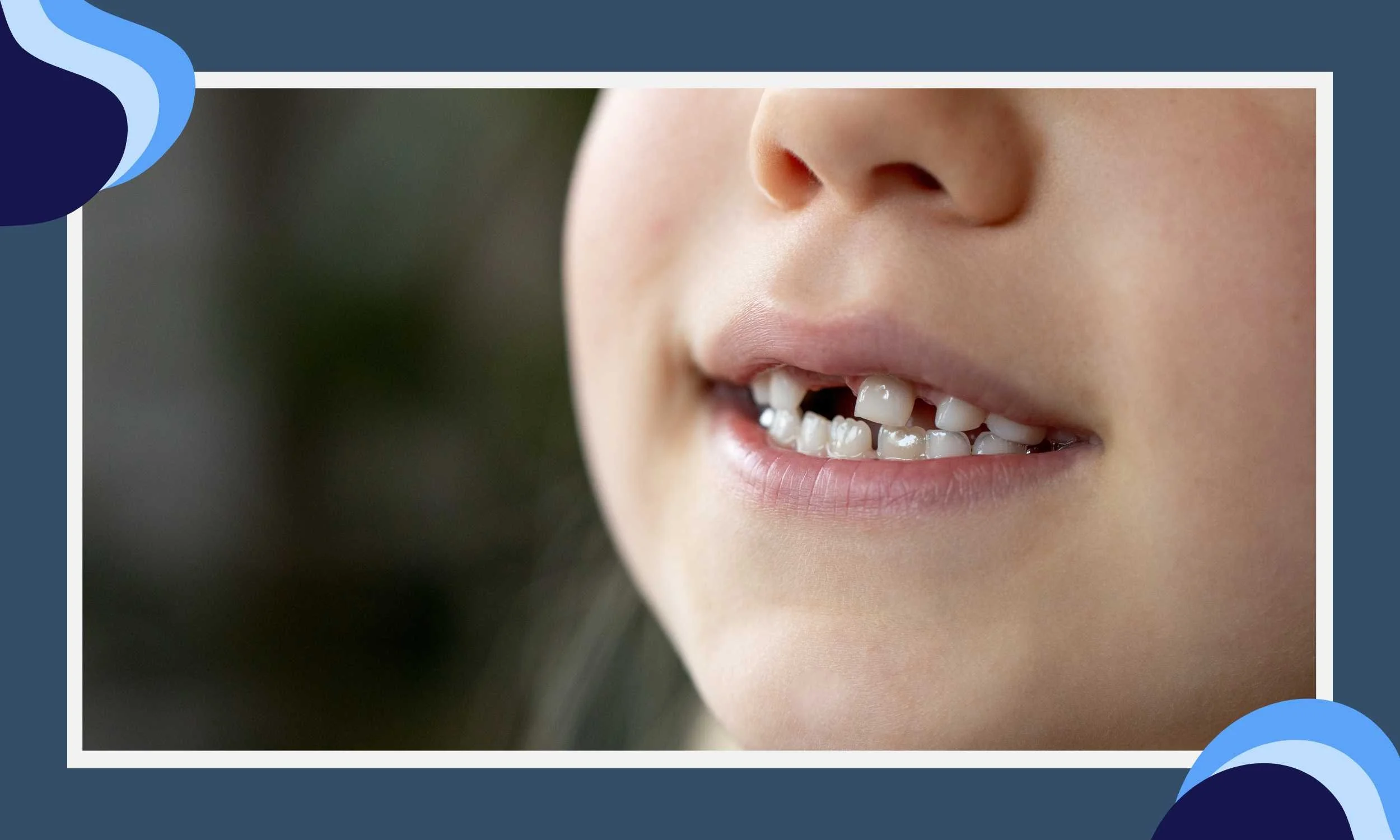
If your child loses a baby tooth earlier than expected due to decay, injury, or an extraction, your pediatric dentist may recommend a space maintainer. This device keeps the area open so permanent teeth can come in as intended.
This guide explains what space maintainers are and what you can expect during the process.
What a Space Maintainer Does
A space maintainer is a small dental appliance that can be either fixed or removable. It holds the gap left by a missing baby tooth and keeps nearby teeth from shifting into that space.
Baby teeth guide permanent teeth into position as they develop. When one is lost too soon, the surrounding teeth may begin to move into the empty space. Over time, this can reduce the room available for the adult tooth.
A space maintainer keeps that space open so the permanent tooth can come in where it should.
Types of Space Maintainers
Space maintainers are not all the same. The type recommended for your child depends on their age, where the tooth is missing, and how long the space needs to be maintained.
Fixed Space Maintainers
Fixed space maintainers are cemented onto the teeth and stay in place until the dentist removes them. Since they remain in the mouth, they are often used for younger children who may have difficulty managing a removable appliance.
There are several designs. A common option is the band-and-loop maintainer, which uses a metal band on one tooth connected to a wire loop that holds the space. Other designs include crown-and-loop and similar variations based on the location of the missing tooth.
Because the appliance stays in place, your child does not need to manage it daily. However, they should avoid very sticky or hard foods that could loosen or damage it.
Removable Space Maintainers
Removable space maintainers look similar to a retainer and can be taken out for eating and brushing. They are typically used for older children who can keep track of the appliance and wear it as directed.
Since they can be removed, consistent use is important. If the appliance is not worn as instructed or is often misplaced, a fixed option may be a more dependable choice.
How Long the Appliance Stays In
The amount of time your child will need a space maintainer depends on when the permanent tooth is ready to come in. Your dentist will check your child’s tooth development during regular visits, often using X-rays to follow the progress.
As the adult tooth begins to move toward the surface, the appliance can usually be removed. Some children may need a space maintainer for only a few months, while others may wear one for a couple of years, depending on how their teeth develop.
How Space Maintainers Affect Crowding and Future Orthodontic Treatment
One of the main benefits of a space maintainer is that it can reduce the risk of crowding. When teeth stay in their intended positions, permanent teeth are more likely to come in with enough space and better alignment.
A space maintainer does not prevent the need for orthodontic care in every case. Tooth development is influenced by several factors, including jaw size, genetics, and the timing of other tooth loss.
What a space maintainer does is preserve the space that might otherwise be lost. By doing this, it removes one common cause of crowding as your child’s permanent teeth come in.
Read also: When to Consider an Orthodontic Evaluation for Your Child
Ongoing Care and What to Expect
Each child’s development is different, so regular dental visits remain important. These checkups allow your dentist to monitor changes over time and address any concerns as they arise. If something does not look right, it is best to mention it early.
If you have questions about a missing tooth or your child’s oral health, our team at Pelican Pediatric Dentistry can walk you through your options. We serve families in New Iberia, Lafayette, Scott, and the Acadiana area. Call to schedule an appointment and receive a plan tailored to your child’s needs.